

Every time a new assignment came in, Rahul would think to himself, 'I have loads of time! I'll definitely start tomorrow'. Later when he would sit down to work on it, he would first feel like watching his favourite TV series and would say to himself that he will start working, "just after this one episode". However, cut to one day before the submission deadline, he would find himself doing all the familiar- pulling an all-nighter, wondering how he found himself in this position all over again! He feels like he is caught in the middle of a cycle of 'If only I had started earlier!' and 'next time will be different'.
As students, most of us have often found ourselves in similar situations. It is after all not an easy loop to break out of!
InitiationProcrastination is when you delay completing important tasks and instead engage in something more pleasant but of lesser importance, even after knowing that there will be negative consequences. Remember that procrastination is not simply 'laziness'.
Can you think of a couple of instances where you may have done so?
There are many reasons why people procrastinate. Which of these sound relevant to you?
While it is natural to feel some discomfort when faced with important tasks, like an exam, it can be made worse because of some deeper, less obvious factors like not feeling confident enough, worrying about perfecting the task, or being scared that you will fail. In an attempt to dodge the resulting unpleasant emotions (like insecurity, frustration, anxiety), we often engage in other pleasurable activities instead (E.g. Internet surfing, YouTube and gaming). While we feel better in the short run, there are other consequences too, like feeling guilty and more discomfort later, that lead to the continuation of the procrastination cycle.
How Can I Tackle Procrastination?
Procrastination can affect your productivity and prevent you from doing your best. It may appear to be difficult, but, like most other habits, one can make changes with some continued effort.
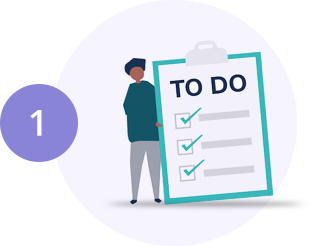
Being clear about what you want to achieve will help improve your productivity.
If you have limited time (the exam is in a week! I can't sit and write goals!), simply write down a list of things you need to do in the order of importance and set a timeline for the same.
When you make a list and tick off tasks you have accomplished, it can be a visual symbol of your progress and provide positive momentum. But it is also important to have actual rewards for yourself. These rewards are often the same things that we engage in while procrastinating (using social media /snacking/taking a nap etc.). The trick then is to use them instead as pre-planned breaks (with predefined limits) and thus engage in them guilt-free.
Perfectionism - Worksheet
Something of primary importance once you have a plan is to take action and begin immediately.
In case you are feeling unsettled while beginning a new task, take a moment to practice some deep breathing. Use your breath to settle and focus before returning to the task.
Find more information on deep breathing and other relaxation techniques you can utilize here.
Challenges/Distractions I may face:
What I'll do to overcome them:
Practice being in the moment and tolerating the discomfort arising when faced with a task instead of engaging in alternate activities.
Find more on mindfulness here
Create the right environment by unplugging and removing all distractions. Figure out your most productive hours (early morning/night time) and use your natural patterns to your advantage. Plan in advance how you will deal with potential distractions and challenges. Adding a delay before indulging in your impulses can also help (example: put a lock on the apps you tend to use)
Make the tasks more enjoyable. Use flashcards, turn it into a game, challenge yourself.
Tackle smaller tasks as soon as they arise to prevent them from building up.
Tell some trusted person about your plans. This will not only make you more accountable but you can also rely on this person for support in tougher times.
Hold yourself accountable for your actions but don’t be too hard on yourself for the times you have procrastinated in the past. Practice Self-compassion. Replace your self-critical thoughts with something more helpful (E.g. I am upset I didn't do any work today; what can I learn from what didn't go well so I can try not to repeat it tomorrow?)
Emotional Time Travel: When you recognize that you are procrastinating, try thinking of yourself in the future and imagine how nice you will feel once you finish the task. Through your imagination, let yourself experience the success of accomplishing a task and use it as a motivator to begin work now.