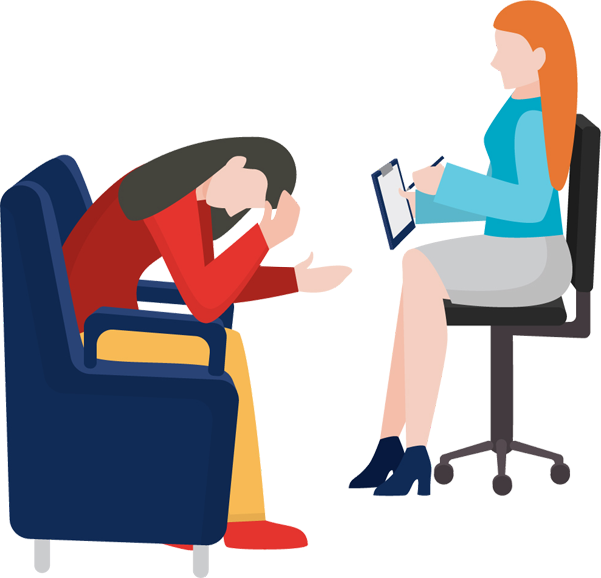

Riya had noticed that Ravi didn't seem like himself these days. He had been missing out on classes and also avoiding friends. Whenever they did meet, he seemed very distant and it was difficult to have a smooth conversation with him. They had just received their midsemester results and Aniket had not performed as good as he had expected. She was concerned for her friend but wasn’t sure what to do. She was also confused if his change in behaviour was something to worry about or just a passing phase.
InitiationAs students living together, you have the maximum interaction with your friends and peers across different situations. This means that you’re the ones who know them best and are most likely to notice if someone is going through some difficulties or if there have been any changes in their behaviour. Though you may notice the changes easily sometimes, you may be unsure about whether they are simply upset and will cope with it or if they need help to feel better. While the best way is to simply ask if they are feeling okay, usually it is not that easy to start these conversations. The following checklist will help you ascertain the severity of the distress and the urgency in finding support.
In case you have noticed the following signs of distress in a friend/classmate, please help in finding support. Even though it may make you feel anxious, your timely help can ensure that the person gets the help they need.
This is not an exhaustive list. If you strongly feel that something is bothering your friend (but cannot find it in the checklist) and they might need some help, then go with your gut and seek help. It's better to be safe than sorry.
Either started or increased the consumption substances or alcohol to 'feel better'
Using more of internet
Has talked about feeling lost, like there is no sense of direction
Have experienced some significant loss lately (any personal loss, difficulty in academics, major life transitions/changes) and are not able to get out of it.
Rarely stepped out of room, not even for usual group outings.
Losing interest and not enjoying activities that they previously enjoyed
Avoiding meeting people, isolating themselves from friends and family
Visible change in personal hygiene (stopping/reduced self-care & grooming)
Episodes of panic attacks or anxiety attacks
Crying a lot / constantly worrying about something or other / finding it difficult to relax
Avoiding certain situations that make them anxious (like social events)
Struggling to get to classes.
Finding it difficult to complete daily tasks
Easily lashing out at others/frequent anger outburst/ extreme mood swings
Constantly keeps procrastinating important work
Change in sleeping habits (lot more or less than before)
Change in eating habits (less or more compared to before)
Having considerably lower energy than before and feeling tired all the time
Having butterflies in stomach
Being nauseous / having sweaty palms
Experiencing dizziness/ increased heart rate/ breathlessness
Frequent headaches / digestion issues
Frequent visits to the hospital without any obvious health concerns
Everyone is against me / Everybody hates me / No one would notice if I was gone / No one cares for me
I am worthless and inadequate / I am undeserving / I'll never be able to get through this work / 'I'm a failure / I'm not good enough / I'm a burden
Things will never get better for me / I'll never be good at anything / I can't see any way out of this
I was better before / I was able to manage things better before / Life was easier before.
Thoughts about hurting oneself
Thoughts expressing hopelessness and worthlessness
Isolating themselves from friends and family
Feeling hopeless, trapped, feeling like being a 'burden'
Doing risky things
Thinking about suicide to deal with the situation
Explicitly stating their desire to harm themselves / 'wanting to end it all'
Looking for ways to harm oneself / talking about harming oneself
Possessing ways to harm oneself (e.g. stocking up on pills, buying self-harming things)
Talking/writing/drawing about death