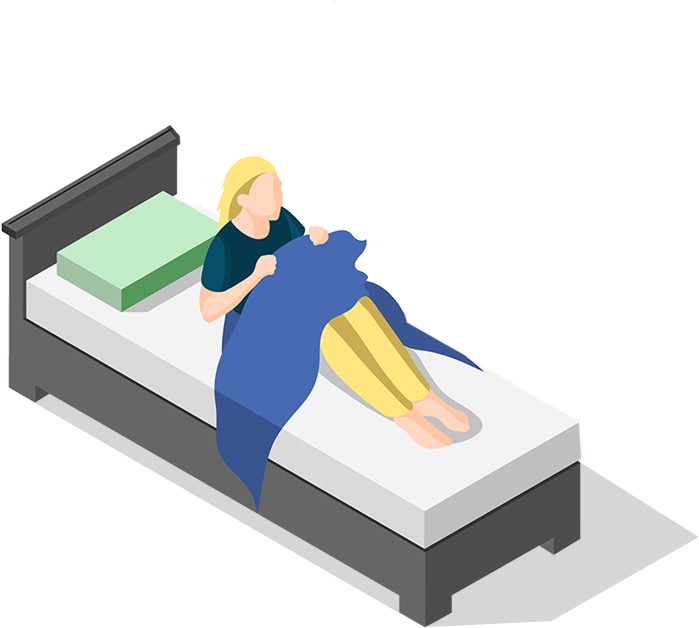

Supriya had been finding it very difficult to sleep well lately. She would toss and turn for hours but wouldn’t fall asleep. After having difficult nights, she would find herself worrying about not being able to sleep in subsequent days (what if today is just a repeat and I don’t fall asleep!). It had started having an impact on the way she felt. Throughout the day she would feel tired, low, and irritated. Concentrating during class had also become quite a task. She was beginning to feel really upset about her sleep cycle and lack of good sleep.
InitiationDoes any of this sound familiar to you?
Many of us as students have faced this at some point. Given the many transitions in life, plenty of impending stressful situations (the never-ending assignments and exams), interpersonal difficulties or even events that you’re excited about (fests!), it is natural that you may have found these to have had an impact on your sleep.
While sometimes sleep issues may be transient and can get better post the experience has passed, it can also continue to stay longer if not dealt with effectively. (for example: sleeping during the day to compensate for a difficult night, eventually making it a habit).

An effective way to begin is by maintaining a sleep diary for a couple of weeks. By filling in these details and documenting your habits, it'll be easier for you to notice patterns and identify what is helping/hindering your sleep, and begin making changes. You could use this outline to get started:
| Day of the week | Monday | Tuesday | Wednesday | Thursday | Friday | Saturday | Sunday |
|---|---|---|---|---|---|---|---|
| I went to bed at | |||||||
| It took me approximately ___ long to actually fall asleep | |||||||
| Number of hours I slept | |||||||
|
I would say my sleep quality was (on a scale of 1 to 5) |
|||||||
| I was feeling ___ during the day (energetic, rested, irritated, dull, groggy, happy, alert, sleepy, etc.) | |||||||
Before going to bed I:
|
|||||||
| Other possible reasons my sleep was disturbed (took a nap during the day / there were too many distractions / too many thoughts) |

After multiple nights of not being able to sleep peacefully, it is likely that your room and bed would become associated with the frustration you feel about not being able to sleep. The idea then is to re-associate the environment with successful attempts to sleep. This can be done by sticking to certain behaviours like:

Feeling tense and anxious can be major hindrances in achieving good sleep. Different relaxation techniques can be used to address the same ranging from deep breathing, muscle relaxation, to meditations. See what works best for you!

Any sleep-related misconceptions or other worries that may be bothering you can make it harder to sleep. Be conscious of what's going through your mind when you’re struggling. Challenge any unhelpful beliefs to find more realistic versions. For example
I’m not going to fall asleep tonight just like all these days and I won’t be able to manage tomorrow.
A more realistic thought: I do fall asleep eventually and even though I am tired, I get through my days.

Sleep hygiene refers to basic lifestyle factors that influence the quality of sleep. Some of these include:
Habits that I have noticed are making it difficult for me to sleep:
The ones that I would like to start working on:
What I’ll do:
My personal bedtime routine that I will try and stick to: